Oxy-Gel

Encaustic Victorian Tiled Hallway Floor Restoration Kirby Stephen

Renovating an Original Encaustic Tiled Victorian Hallway Floor in Kirkby Stephen

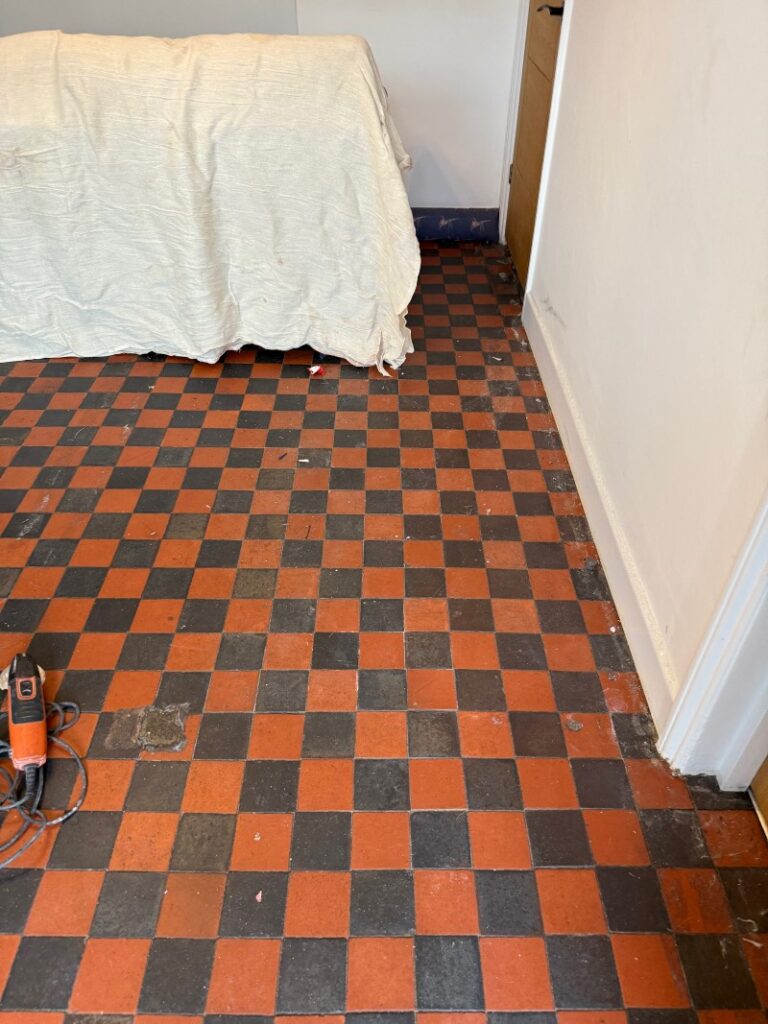
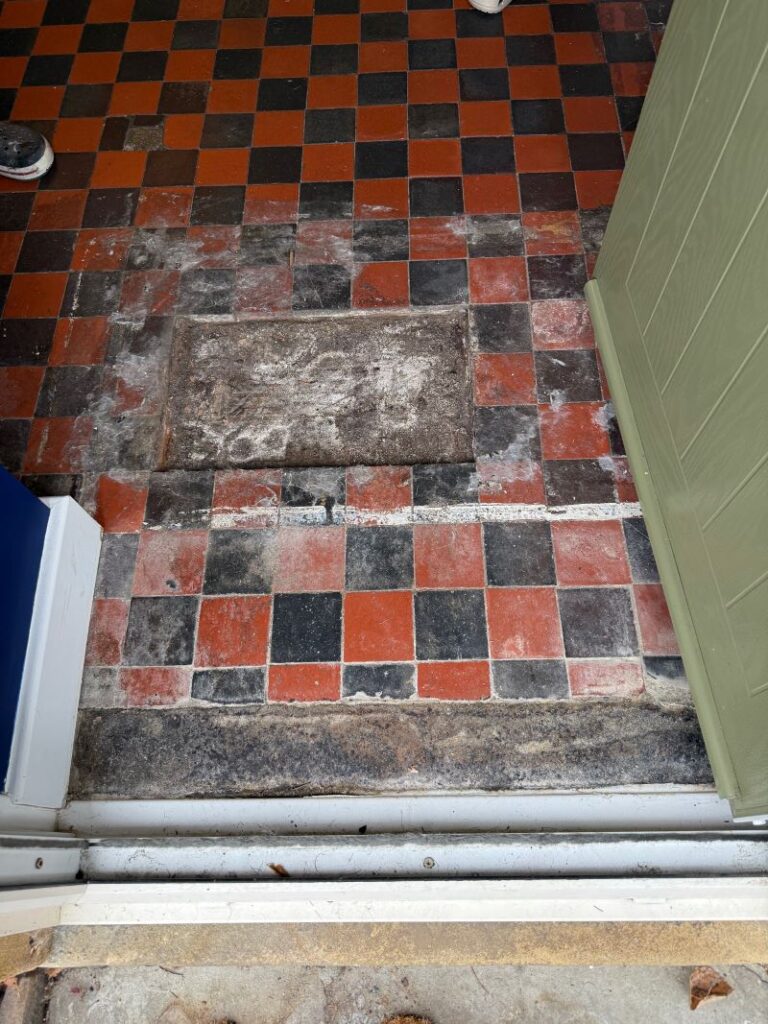
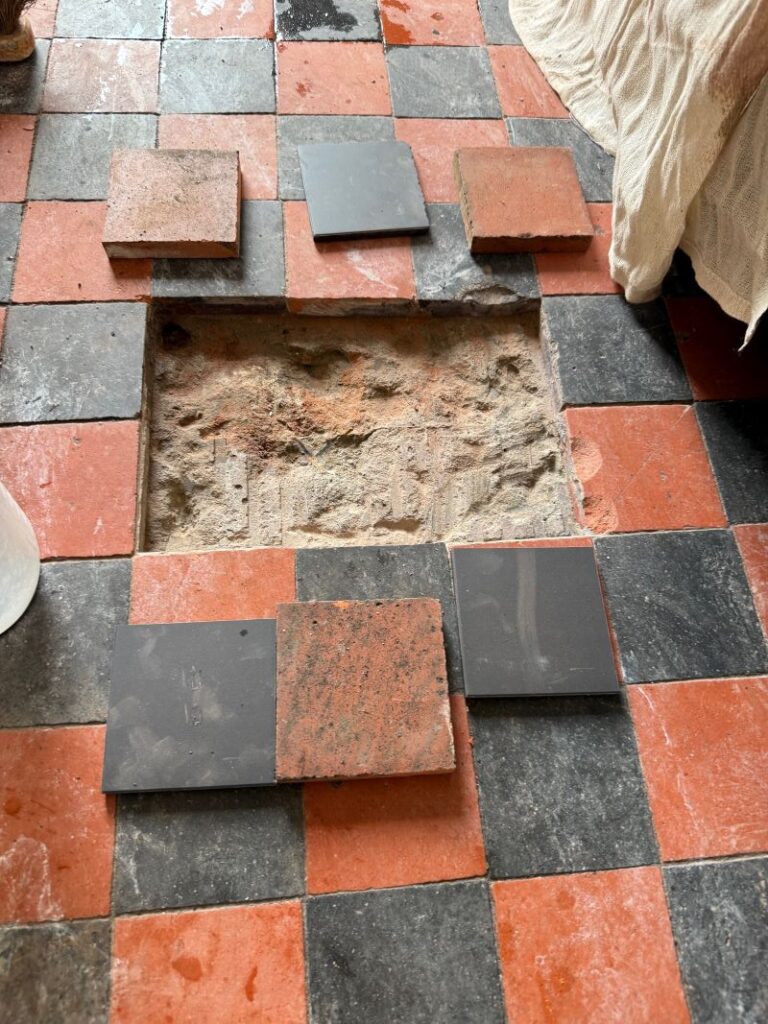
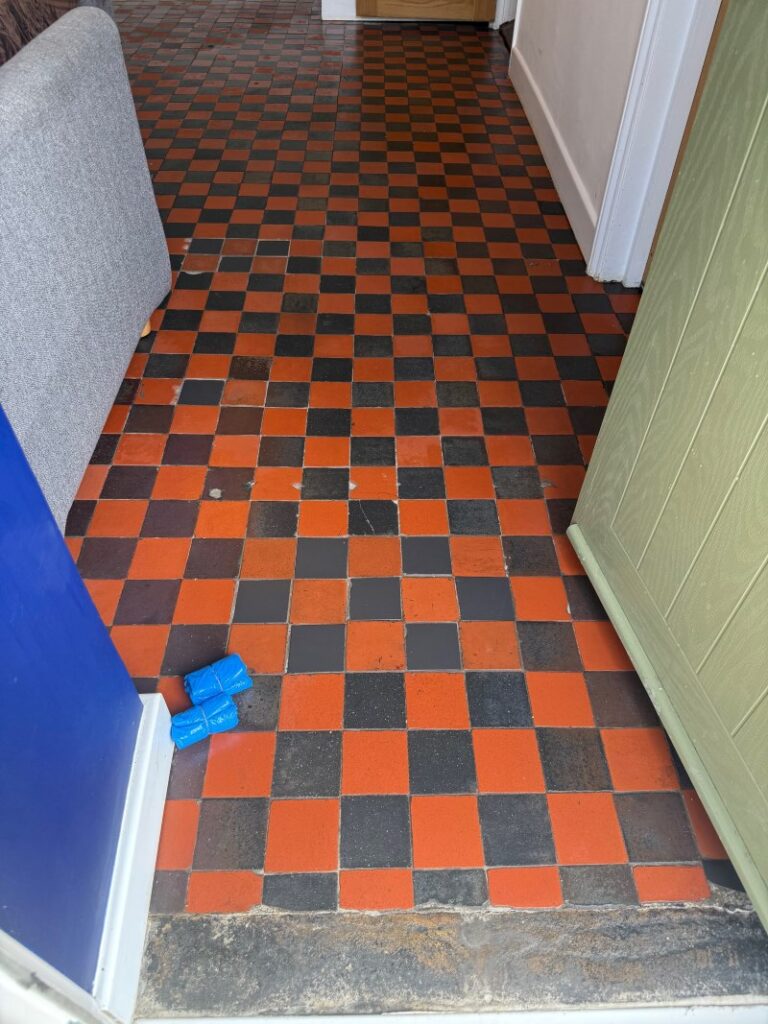
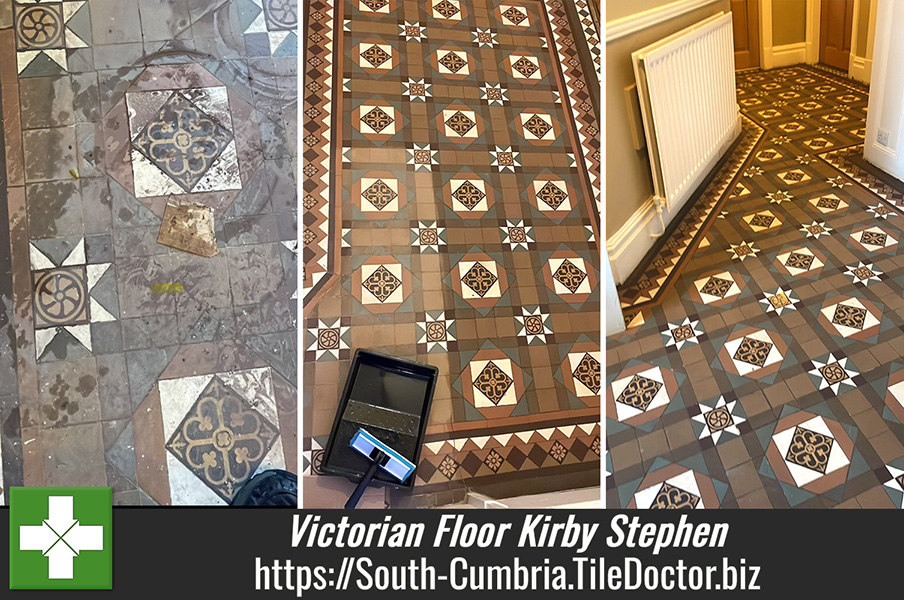
A client from Kirkby Stephen had uncovered a heavily soiled and stained Victorian tiled floor in their hallway. The tiles were clearly quote old and included some lovely, patterned tiles as part of the design which were clearly handmade encaustic tiles that must have been over 150 years old.

Encaustic Victorian Tiled Hallway Floor Before Cleaning Kirby Stephen

Keen to have the original floor restored to its full potential I was asked to call in and quote for completing a sympathetic restoration of the whole floor including cleaning and then sealing. Having inspected the floor and confident it could be restored to a very good condition I discussed the main issues and came up with a plan for the work which would be respectful of the floors age.

Happy with my plan and detailed quotation I was given the go ahead and we agreed a date for my return.

Deep Cleaning an Encaustic Tiled Victorian Hallway Floor

Before starting cleaning, protective tape was applied to the stair carpet, new oak doors, skirtings, and other surrounding surfaces. This ensures all adjacent areas are safeguarded from moisture and chemical exposure.

The property had a cellar below and I was concerned that any excess liquids used during cleaning could seep through the floor, as a result I decided to clean the floor using low moisture gel cleaning products. This involved spreading Tile Doctor Oxy-Gel across the entire floor and then allowed the product to soak in for ten to fifteen minutes. The gel was then worked into the tiles using a deck brush initially and then a rotary scrubber fitted with a black pad.

The soiling was then extracted with a wet vacuum and then repeated until I was satisfied the tiles were as clean as they could be. In-fact the floor was so dirty this process had to be repeated five to six times to lift deep-set grime and reveal the original colours of the tiles. Once done the floor was given a quick rinse with water which was then extracted using the wet vacuum.

Last step was to give the tiles an acid rinse using Tile Doctor Acid Gel which is another gel cleaner which can remove cement-based residues, mineral deposits, and other contaminants. The gel was allowed to soak in briefly before being removed using the wet vacuum.

The last step in the process was to give the floor another quick rinse to remove any trace of cleaning products and then dried thoroughly with the wet vacuum and left to dry off fully with the aid of several floor fans.

Sealing an Encaustic Tiled Victorian Hallway Floor

The next day I returned to inspect the floor and make sure it was dry using a moisture meter to confirm it was dry enough to be sealed. Sealers don’t cure well on damp floors resulting in a patchy appearance so it’s always a good idea to check for dampness first.

Encaustic Victorian Tiled Hallway Floor During Sealing Kirby Stephen

To seal and protect the Victorian tile, a couple of coats of Tile Doctor Colour Grow were applied to the floor using a paint pad applicator. Colour Grow is a fully breathable, colour enhancing sealer which soaks into the tile, occupying the pores and thereby preventing dirt from residing there. This ensures dirt remains on the surface where it can be easily cleaned away.

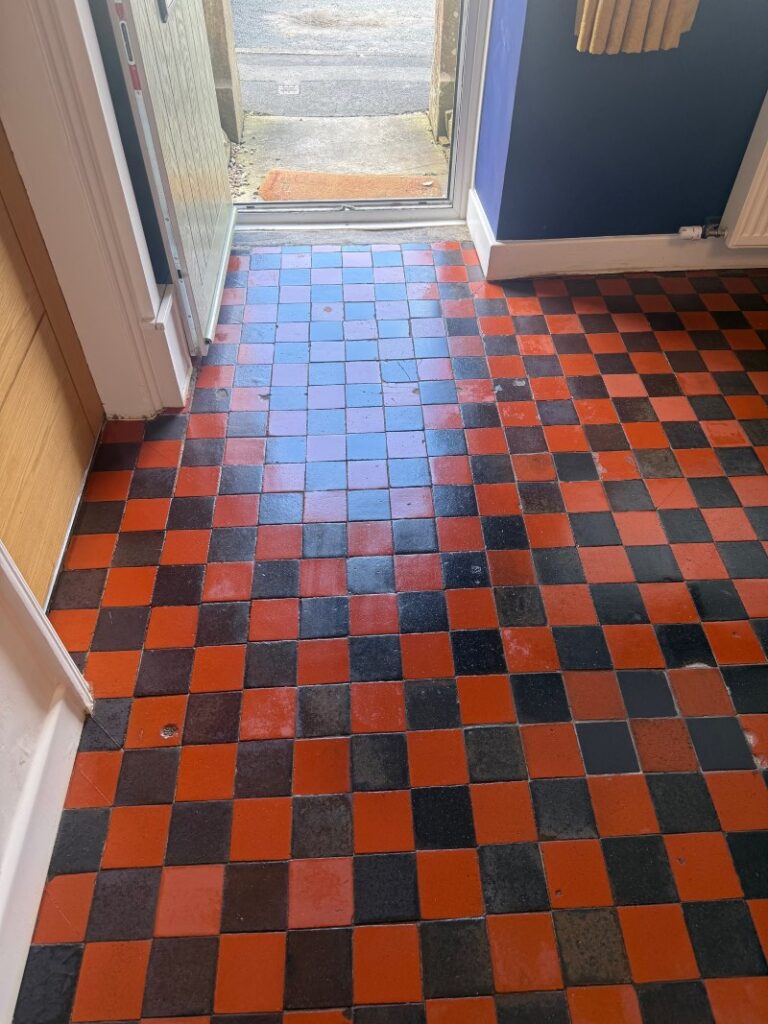
You can see from the photographs that the transformation was dramatic, I just wished I took more photos. Certainly, my client was extremely pleased with the final result. For aftercare I recommended they use Tile Doctor Neutral Tile Cleaner which is a mild but effective floor cleaning product that’s designed for use on sealed floors.

Encaustic Victorian Tiled Hallway Floor After Restoration Kirby Stephen Encaustic Victorian Tiled Hallway Floor After Restoration Kirby Stephen


Professional Renovation of a Victorian Tiled Hallway in Cumbria

Renovating an Original Encaustic Tiled Victorian Hallway Floor in Kirkby Stephen Read More »

Red and Black Dorchester Pattern Quarry Tiled Floor Restoration in Kendal

Quarry Tiled Floor Restoration in Kendal

A homeowner from Kendal asked me to inspect an old Quarry tiled floor laid in the classic Red and Black Dorchester pattern. Several tiles were damaged or back filled with concrete and so needed replacing, but overall, the floor just required a deep clean and seal. I suspect something had been dropped on the damaged tiles at some point, causing them to deteriorate over time. With old floors like this, their history is often lost.

Red and Black Dorchester Pattern Quarry Tiled Floor Before Restoration in Kendal

I provided a quote for the work, which included replacing the damaged tiles, deep cleaning the floor, and sealing it for protection. Red and Black Quarry tiles are still popular, so I was confident I could find replacement or salvaged tiles that would match the floor. The homeowner accepted the quote, and a date was set for the work to begin.

Cleaning and Repairing a Quarry Tiled Floor

Upon arrival, we protected the areas near our work site and carefully removed the damaged tiles, ensuring not to dislodge adjacent tiles and expand the project unnecessarily. The foundation was cleaned to remove rubble and old adhesive, and the replacement tiles were shaped and dry-fitted. They were then secured with fresh adhesive and grouted. I was confident the repair would be invisible once completed.

Red and Black Dorchester Pattern Quarry Tiled Floor During Repair in Kendal Red and Black Dorchester Pattern Quarry Tiled Floor During Repair in Kendal

The tiles were left to set overnight. The next day, we deep cleaned the entire floor using Tile Doctor Oxy-Gel. Old floors like this lack a damp-proof membrane, so I prefer gel cleaners that minimise water usage. The gel was applied neat to the quarry tiles and allowed to soak for about ten minutes before being worked in with a 200-grit pad fitted to a rotary buffer. This combination is excellent for cleaning old tiles, as there was a significant amount of carpet glue around the room’s edges that needed removal.

The slurry was extracted with a wet vacuum, and the process was repeated with another gel product called Tile Doctor Acid Gel scrubbed in with a deck brush. This product further cleans the tiles and being acidic dissolves any salts present in the tile, it also etches the tiles microscopically which helps to achieve a better bond with the sealer. The gel was then rinsed off and extracted with the wet vacuum, and the floor was left to dry overnight.

Sealing a Quarry Tiled Floor

The moisture level readings were satisfactory the next day, and we proceeded to seal the floor with a coat of Tile Doctor X-Tra Seal. This oil-based breathable sealer is ideal for old floors like this, as it leaves a light sheen and enhances the colour of the black and red clay.

The result was transformative; the repair was indeed invisible, and the Quarry tiles looked much cleaner and brighter. Needless to say, my client was very pleased with the work.

Red and Black Dorchester Pattern Quarry Tiled Floor After Restoration in Kendal

X-Tra Seal works by soaking into the clay tile, occupying the pores, and preventing dirt from becoming ingrained in the tile, where it can be difficult to remove. This effectively keeps dirt on the surface, where it can be easily cleaned away.

For aftercare cleaning, I recommended using a sealer-compatible tile cleaner such as Tile Doctor Neutral Tile Cleaner. This pH-neutral cleaner won’t erode the sealer, which can be a significant problem with many stronger products found in supermarkets.

Red and Black Dorchester Pattern Quarry Tiled Floor After Restoration in Kendal


Professional Restoration of a Quarry Tiled Floor in South Cumbria

Quarry Tiled Floor Restoration in Kendal Read More »

Victorian Floor Renovated in Windermere Lake District

6-inch Red Victorian Floor Tiles Renovated in a Windermere Kitchen

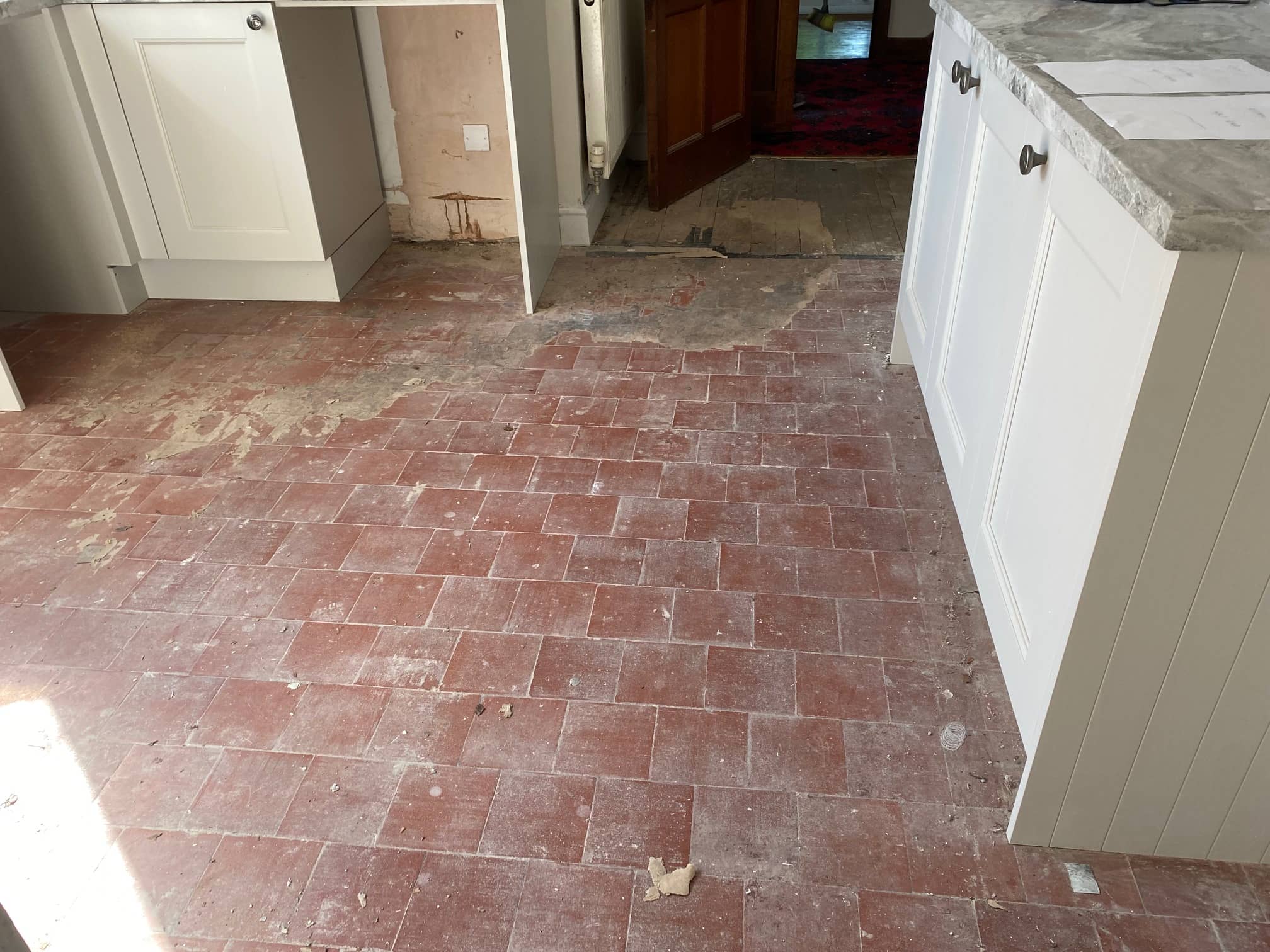
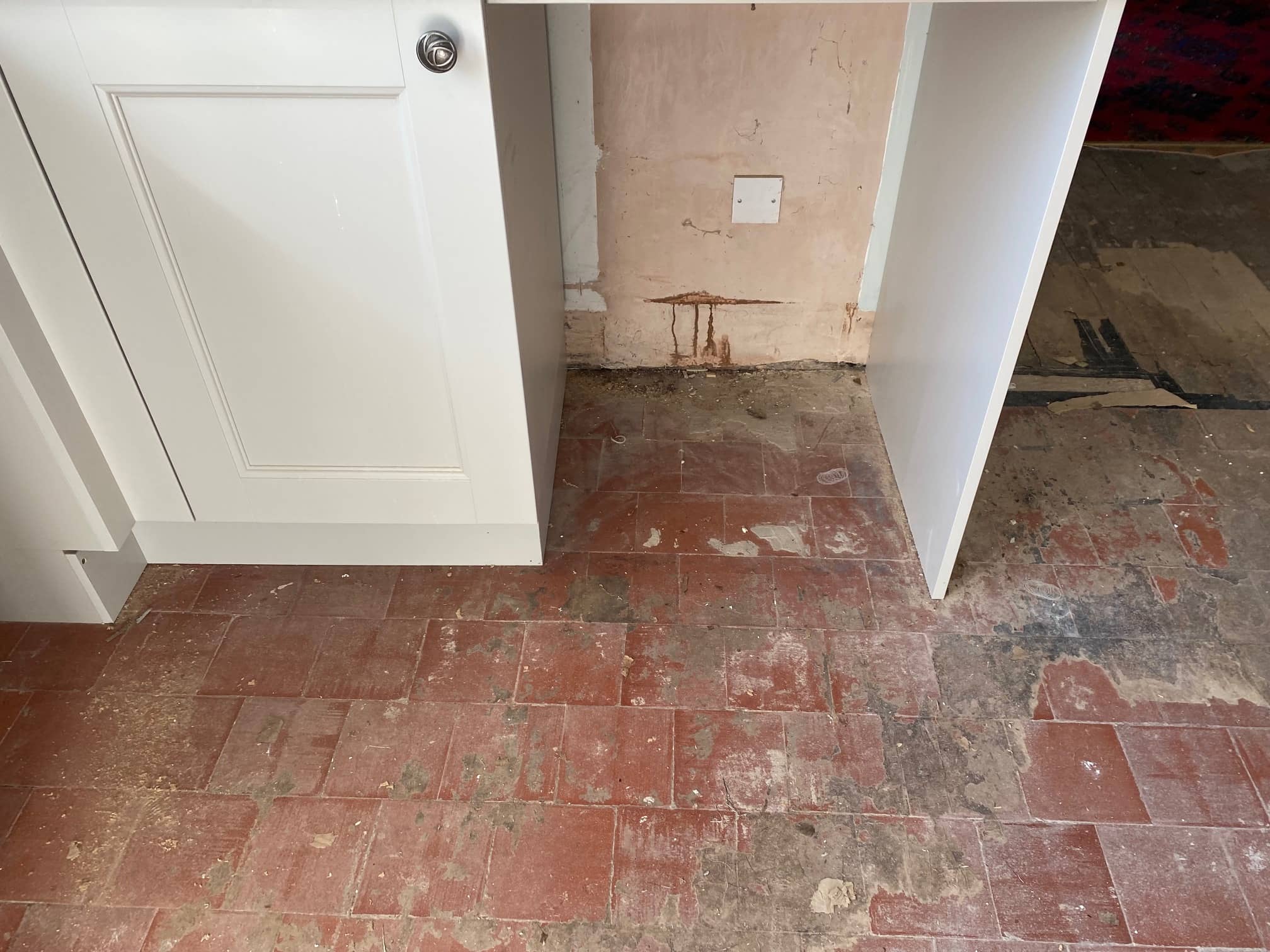
These old Red Victorian floor tiles in the kitchen of a property in Windermere might appear to be Quarry Tiles on first inspection however they are not. One way of telling is to look at the grout lines, modern quarry tiles are always set with at least 4mm grout joints (sometimes a lot more). Victorian floor tiles are always rebated together as close as possible with only a millimetre of grout being put in place but as grout wasn’t around over a 100 years ago it was either white limecrete or grey screed cement which was used.

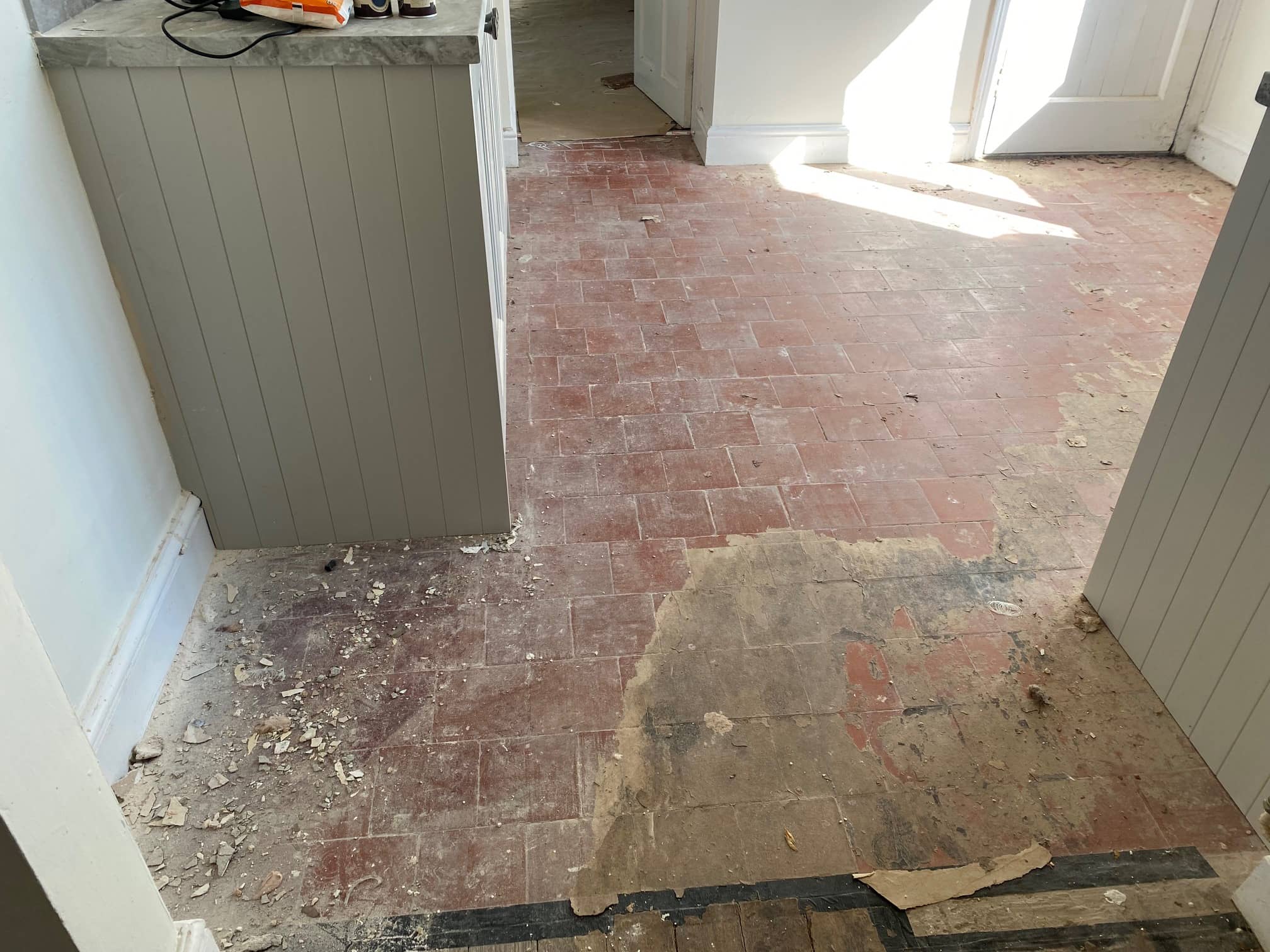
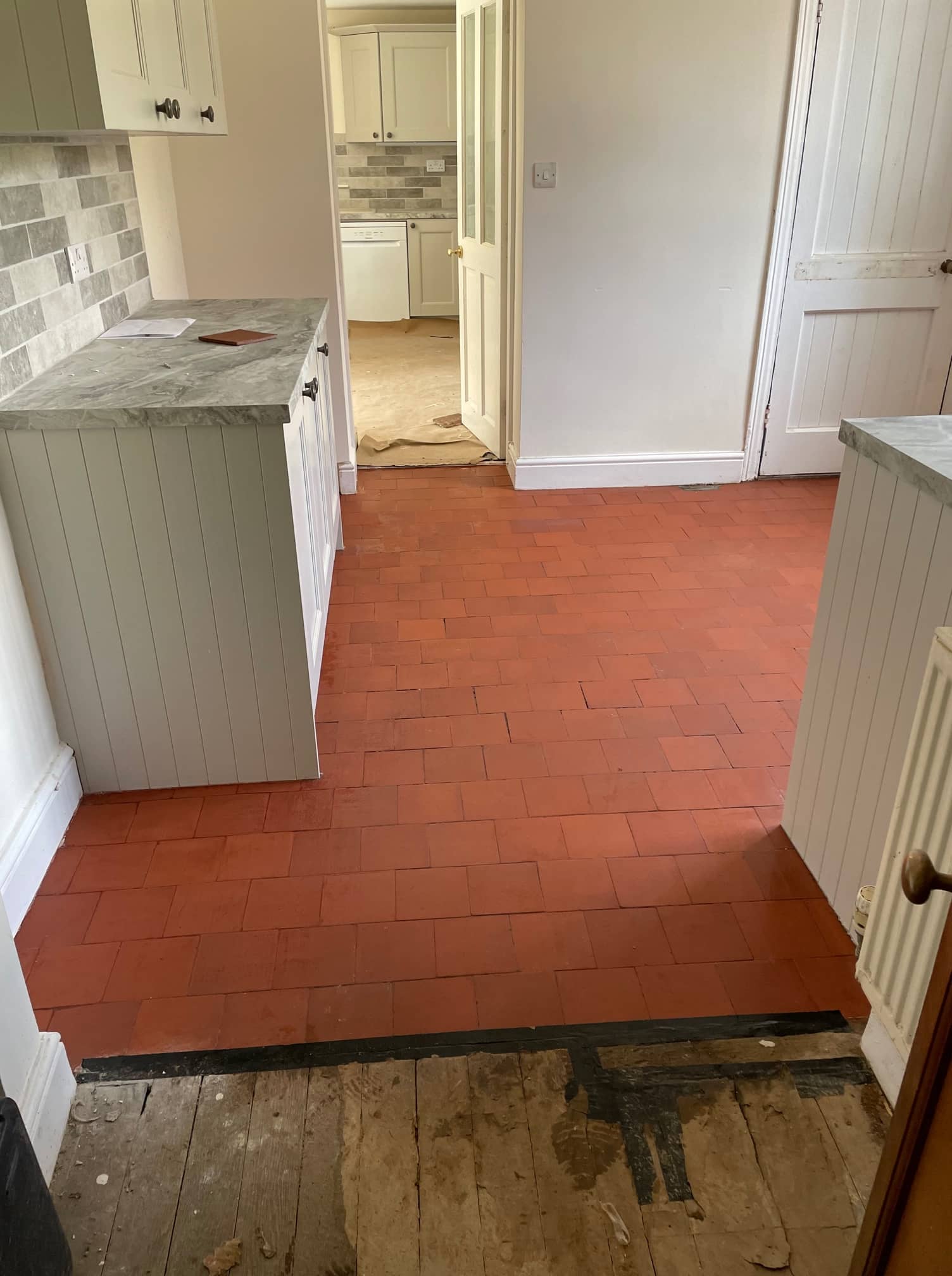
Old Victorian Period Red 6 inch floor tiles before cleaning in Windermere

It’s important to know what you are working on as standard Victorian tiles have no sand fillers in the clay unlike the much thicker contract and standard quarry tiles; these red Victorian tiles are pure clay all the way through which means we can go much deeper on the cleaning.

Old Victorian Period Red 6 inch floor tiles before cleaning in Windermere

The floor had previously been covered in carpet for many years and to secure it and the underlay to the tiles a strong adhesive had been used. A self-levelling cement compound had also been applied and lastly there was red paint to deal with.

Old Victorian Period Red 6 inch floor tiles before cleaning in Windermere

Cleaning a Victorian Tiled Kitchen Floor

Before cleaning the first task was to run a line of silicone around all the kitchen unit edges. These are often made of MDF and not solid wood and any amount of water will blow the MDF within 5 to 10 minutes of contact. Clear silicone is used for this and left in place as it’s a great way to protect the units even from the water used in daily mopping of the floor tiles. Once that had been applied the units were then covered with a protective plastic sheet that was secured in place with tape.

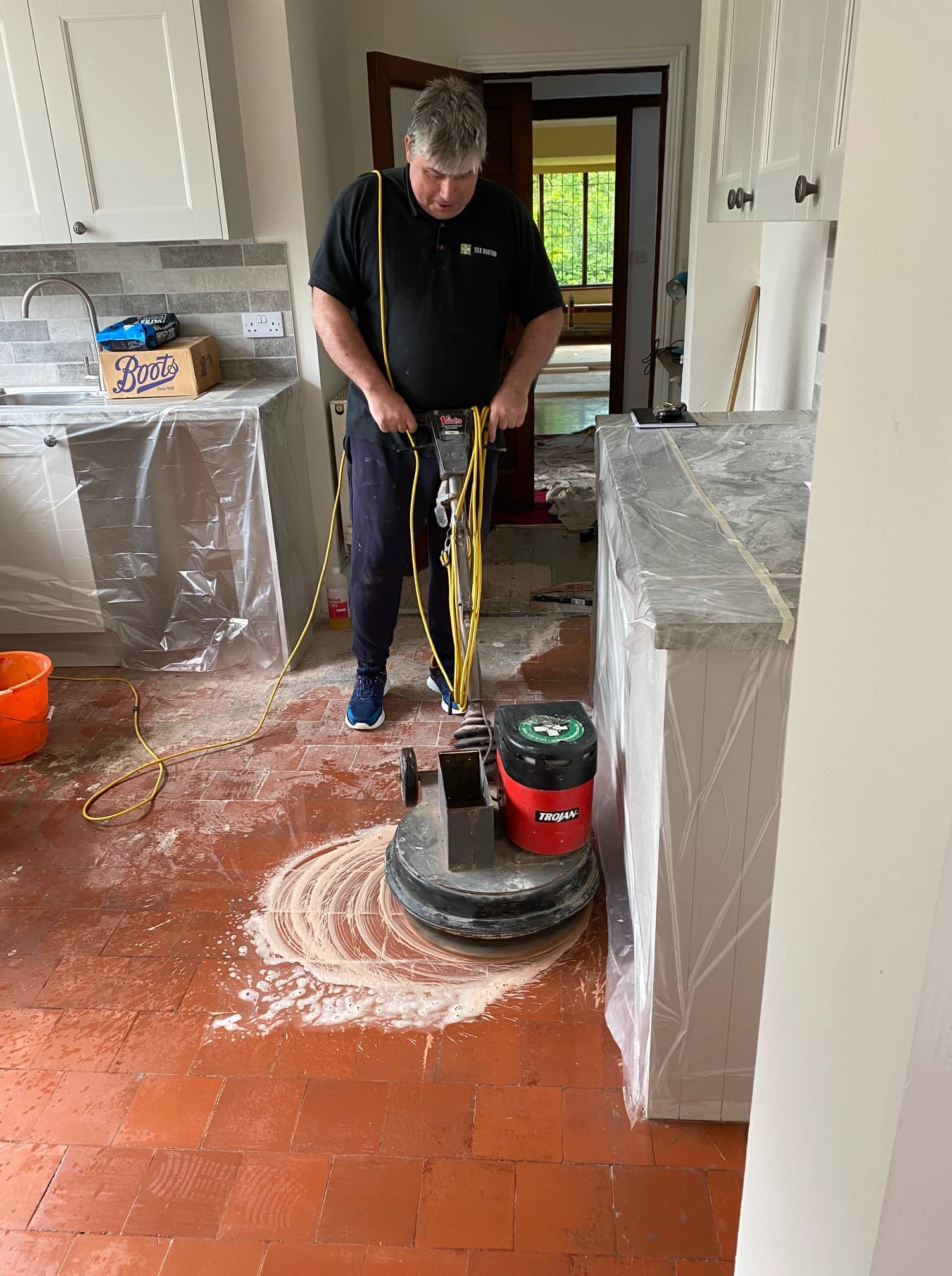
To tackle the red paint and other contaminates, Tile Doctor Oxy Gel was applied and scrubbed into the floor, this softens the paint and worked well on the remnants of carpet underlay that were still firmly attached to the tiles.

Old Victorian Period Red 6 inch floor tiles during cleaning in Windermere

The cement screed was mostly scraped off and anything left over was loosened using Tile Doctor Acid Gel worked in with a buffing machine fitted with a black scrubbing pad. Some edging work was needed, and this had to be done by hand with small brushes. To finish off the floor was rinsed with water and a wet vacuum was used to extract all soiling and residue.

Sealing a Victorian Tiled Kitchen Floor

With the cleaning finished we left for the day and let the floor dry off overnight. The use of gel cleaning products ensured water was kept to a minimum and allow for a quicker drying time.

Next day the tiles were sealed with the tiles two coats of a breathable sealer called Tile Doctor X-Tra Seal. This sealer is an oil-based product that adds structure to the tile and does a great job of lifting the colour in the clay tile. X-Tra Seal is also fully breathable and will cope well with any moisture rising through the floor. This is always a concern with old floors like this one that don’t have the benefit of a damp proof membrane.

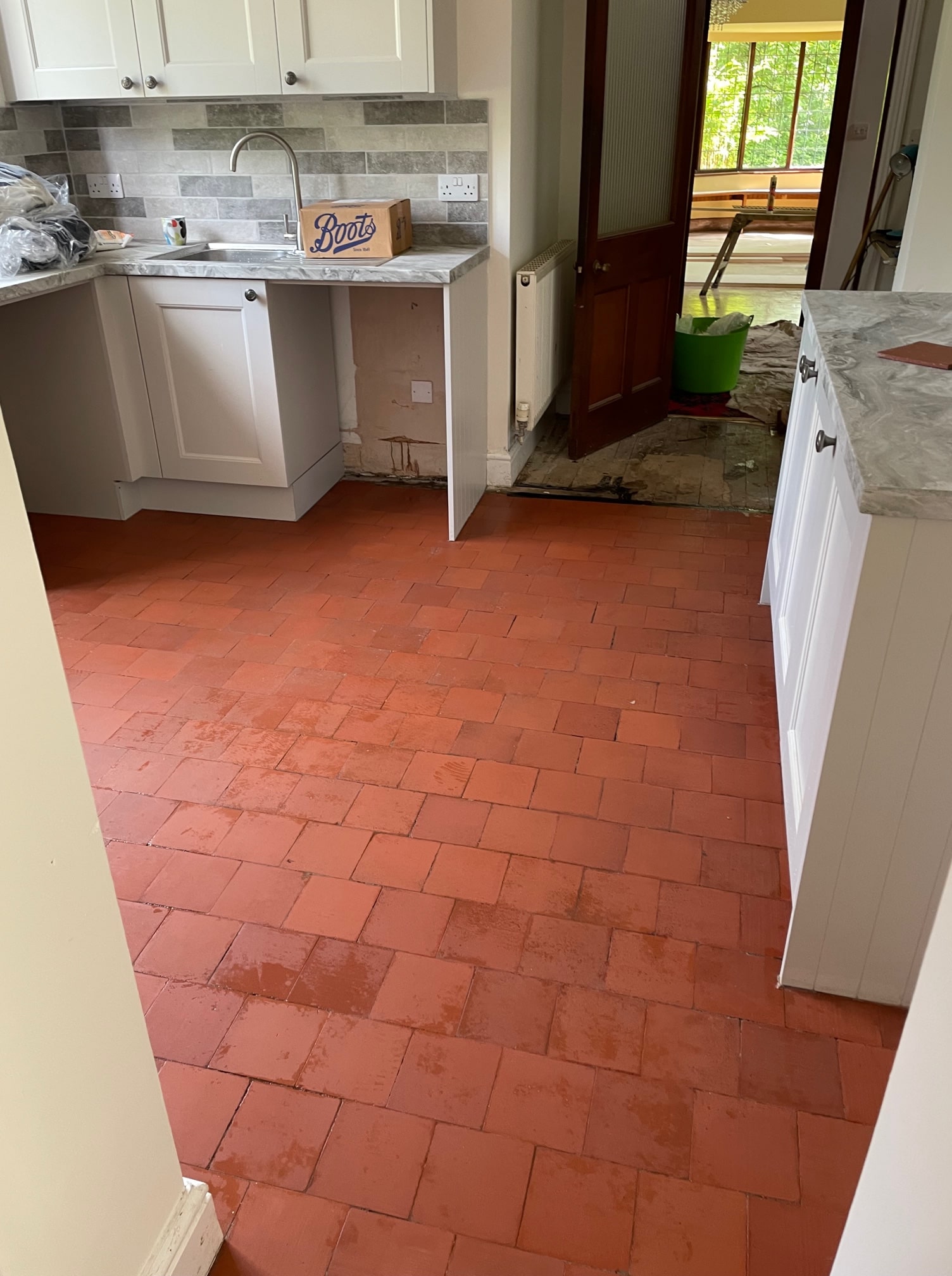
Old Victorian Period Red 6 inch floor tiles after cleaning in Windermere

You will notice some patchiness on the after pictures of the clay tiles after the sealer had dried. With old floors like this you never know its full history and what might have been used on it before, in this case I suspect the patchiness is down to the miss use of a chemical cleaning product in the past, probably something with a strong acid base. These tiles are generally not acid sensitive but constant use of acid on any surface will deteriorate the finish as it opens the pores in the clay and lets the dirt in. Once the pores are open on a clay tile, they won’t close so we resolve this by using X-Tra seal and filling any cavities with oil.

Old Victorian Period Red 6 inch floor tiles after cleaning in Windermere

Once done the floor looked so much cleaner and brighter and the new sealer will protect it from ingrained dirt well into the future.

Old Victorian Period Red 6 inch floor tiles after cleaning in Windermere


Professional Restoration of a Victorian Tiled Kitchen Floor in Cumbria

6-inch Red Victorian Floor Tiles Renovated in a Windermere Kitchen Read More »

Scroll to Top